
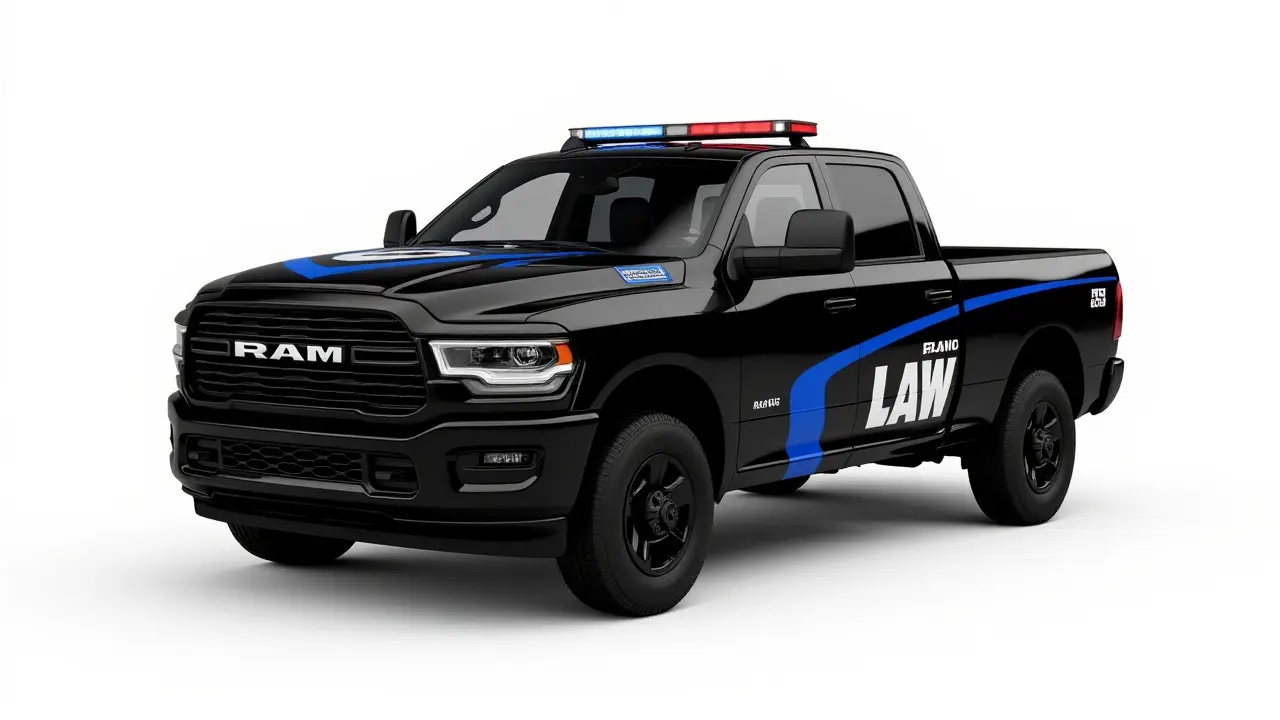
Law enforcement agencies just got a massive upgrade in firepower and utility. On April 13, 2026, Ram unveiled the 2027 Ram 2500 Emergency Response Vehicle (ERV), the first 3/4-ton truck ever engineered to be fully pursuit-capable. This isn't just a truck with a siren bolted on; it's a heavy-duty machine designed to chase down suspects and handle high-speed intercepts without falling apart. For years, agencies had to choose between a nimble pursuit vehicle or a heavy-duty hauler. Now, they don't have to.
The stakes for this launch were incredibly high. To prove the ERV could handle the heat, it was put through the ringer at the Michigan State Police (MSP) vehicle trials. If you aren't familiar, these trials are basically the "Special Forces" of automotive testing. They don't just drive the cars; they push them until something breaks. The ERV didn't just survive; it thrived, marking a shift in how heavy-duty trucks are viewed in the public safety sector.
Here's the thing: most heavy trucks are built for torque and towing, not for weaving through traffic at 90 mph. But the ERV changes that math. Tim Kuniskis, Head of American Brands, SRT Performance, NA Marketing and Retail Strategy at Ram, put it bluntly: "When your job means running toward danger, not away from it, you don't have time to second-guess your equipment." It's a clear signal that Ram is targeting the most demanding operational needs of government agencies.
The Engineering Behind the Pursuit Power
To get a 3/4-ton truck to perform like a pursuit vehicle, Ram started with the 2500 Special Service Vehicle platform and then cranked the specs. Under the hood, the Ram 2500 Emergency Response Vehicle packs a 6.4-liter HEMI V-8 engine. It puts out 405 horsepower and 429 lb-ft of torque, which is a lot of muscle for a vehicle this size. The power is managed by a TorqueFlite HD eight-speed automatic transmission and a selectable two-speed transfer case.
But the real secret sauce is in the gearing. Ram swapped the standard 3.73 axle ratio for a beefier 4.10 ratio. Pair that with an anti-spin differential, and you've got a truck that can launch off the line with surprising urgency. Turns out, those tweaks make a massive difference when every second counts during a high-speed chase.
The ERV is also built for the electrical demands of modern policing. It features dual 400-amp alternators. Why? Because between the light bars, sirens, rugged laptops, and radios, emergency vehicles are essentially rolling computers that drain batteries fast. To make life easier for fleet managers, Ram included dedicated wiring and a vehicle systems interface module, making the installation of aftermarket gear a lot less of a headache.
Breaking Down the Michigan State Police Trials
The data from the MSP trials is where this truck really proves its worth. In a world where heavy trucks usually feel like barges, the ERV posted some impressive numbers. It hit 0-60 mph in 8.41 seconds. While that won't win a drag race against a sports car, it's remarkably quick for a 3/4-ton truck. It reached 80 mph in 13.22 seconds and hit 100 mph in 20.5 seconds.
The top speed was recorded at a tire-limited 103 mph, reached in just 0.45 miles. Interestingly, Ram noted that these acceleration times are within two seconds of smaller 1/2-ton trucks and SUVs. That's a huge win for agencies that need the towing capacity of a 2500 but the speed of a smaller interceptor.
But it wasn't all straight lines. The truck had to survive the MSP Evaluation Grattan Raceway in Michigan. The ERV completed 40 full-throttle laps around the two-mile track, which includes a nasty 160-degree hairpin and reverse-camber turns that try to push the vehicle off the road. Oddly enough, the ERV actually outperformed several competitors in post-test tire wear, proving that its 18-inch steel wheels and suspension can take a beating.
Officer Comfort and Tactical Utility
A vehicle is only as good as the person using it, and police officers don't exactly have the luxury of getting out of their cars slowly. Ram redesigned the interior and exterior ergonomics specifically for law enforcement. This means the seats and door openings are optimized so an officer wearing a full tactical vest, belt, and protective gear can exit the vehicle rapidly. Like this. Without fumbling.
The interior is also a hub for communication. There are built-in provisions for the mountains of radios and tablets that usually clutter a police cabin. By integrating these into the design, Ram has reduced driver distraction—a critical factor when driving at high speeds in urban environments.
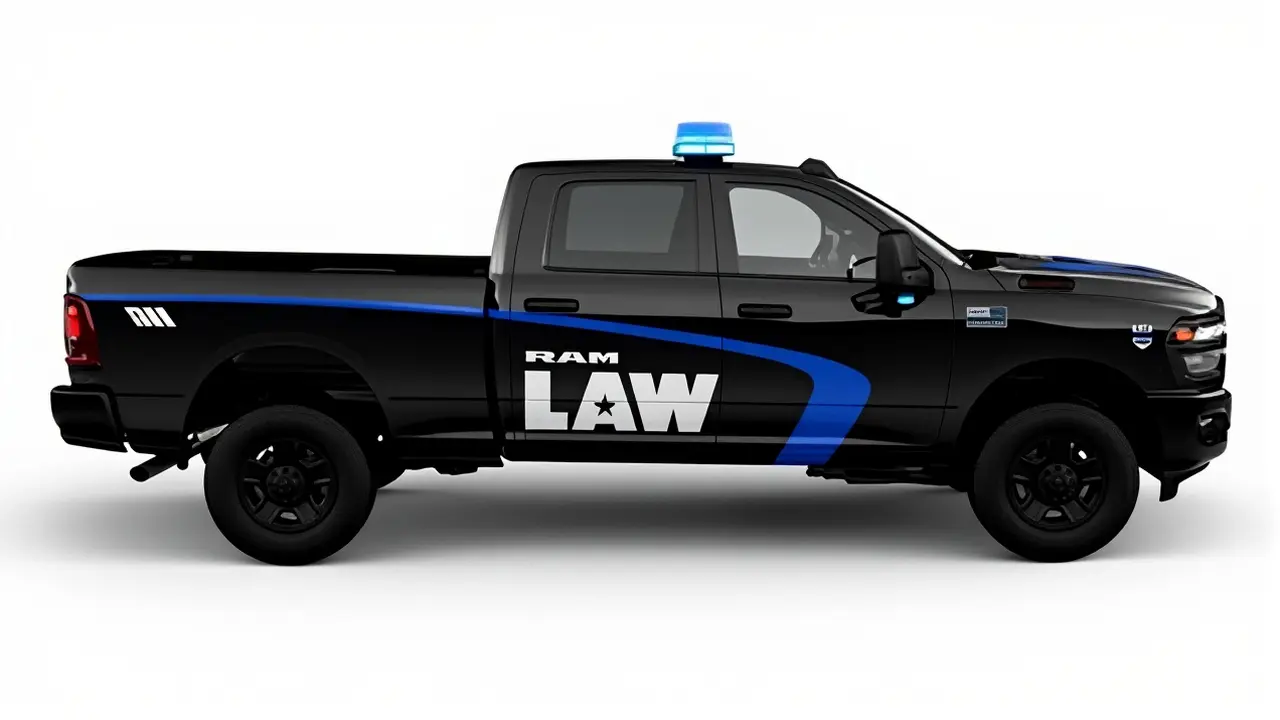
The Broader Impact on Public Safety
This move by Ram is a bit of a game-changer. Historically, if a department needed to tow a boat or a heavy trailer, they used a heavy-duty truck. If they needed to chase a suspect, they used a Ford Explorer or a Dodge Charger. The ERV merges these two worlds. It allows a single vehicle to handle a wide array of tasks, potentially reducing the size of a fleet while increasing its capability.
From a business perspective, this positions Ram aggressively against competitors who have long dominated the police interceptor market. By offering the only pursuit-capable 3/4-ton truck, they've carved out a niche that simply didn't exist until now. It's a strategic play to win over government contracts by solving a very specific, very real problem for first responders.
Frequently Asked Questions
What makes the 2027 Ram 2500 ERV "pursuit-capable"?
Unlike standard heavy-duty trucks, the ERV is engineered for high-speed maneuvers and extreme durability. This includes a 4.10 axle ratio for better acceleration, an anti-spin differential, and reinforced 18-inch steel wheels. It has been specifically validated through the Michigan State Police trials to ensure it can handle high-speed pursuit dynamics and repeated hard braking without mechanical failure.
How did the ERV perform in the MSP acceleration tests?
The ERV clocked a 0-60 mph time of 8.41 seconds and reached 100 mph in 20.5 seconds. Its tire-limited top speed was 103 mph. These figures are particularly impressive because they place the heavy 3/4-ton truck within just two seconds of smaller 1/2-ton trucks and SUVs, proving it can keep pace during emergency responses.
What special electrical features does the ERV have for police use?
To power the heavy load of emergency lights, sirens, and onboard computers, the ERV is equipped with dual 400-amp alternators. It also includes a vehicle systems interface module and additional dedicated wiring/switches, which significantly simplifies the process of installing and managing the various auxiliary electronics required by law enforcement agencies.
Is the interior different from a standard Ram 2500?
Yes, the interior is heavily optimized for tactical use. It features redesigned ergonomics that allow officers wearing full protective gear to enter and exit the vehicle quickly. Additionally, it includes specific mounting provisions and integration points for communications equipment, ensuring that radios and laptops are accessible without obstructing the driver's view or movement.


