
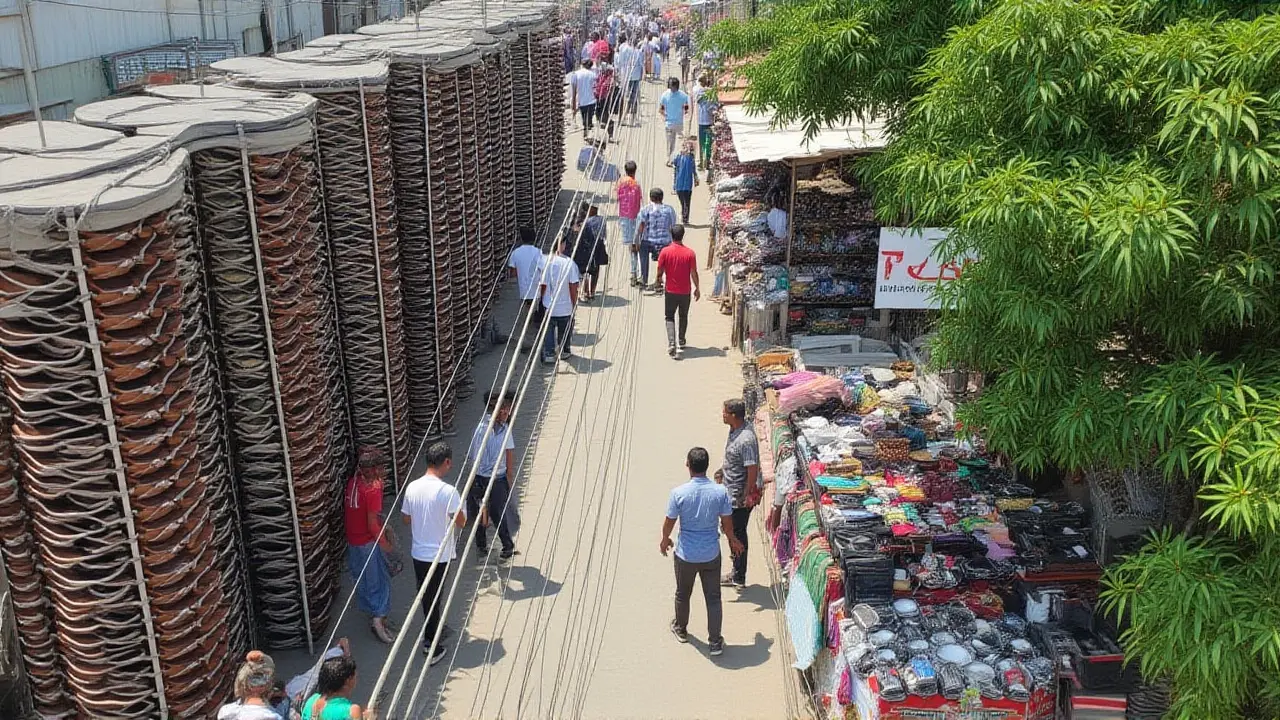
The air inside Gikomba always smells faintly of dust and bargain-priced fabric, but lately, it carries the memory of smoke too. For decades, this open-air hub in Pumwani Ward has been the commercial heartbeat of Nairobi, yet its modern history reads less like a success story and more like a series of near-misses with destruction. Here’s the thing: while traders celebrate the sheer volume of commerce—now numbering 100,000 workers—the ground beneath their feet remains politically and physically unstable.
Gikomba Market sits on a patch of land that changes hands between ambition and crisis. The origins are fuzzy, bouncing between the 1940s and 1960s depending on who you ask, but the consensus points to railway construction workers needing essentials and second-hand clothes brought in by Asian traders. It grew because transport routes met poverty, creating a perfect storm for informal economy. What started as necessity became a massive ecosystem, only to be repeatedly threatened by something else entirely: fire.
The Cycle of Destruction and Resilience
You’d think after the Great Gikomba Fire of September 6, 2000, someone would learn. That blaze burned for eight hours straight, wiping out the used clothing section. But predictability was missing from the equation. Between 1990 and 1995 alone, the site saw ten separate infernos. It wasn’t until June 2018 that the tragedy turned fatal; 15 people died and 60 were injured when timber and clothes stalls collapsed into flames.
The pattern was disquieting. Fires often struck at night, seemingly mysterious. In 2018, three separate incidents occurred close together. Then came April 10, 2019. The Gikomba Market FireKamukunji Sub-county. On that day, over 2,000 structures were razed. This wasn’t just property loss; it wiped out the livelihoods of families relying on daily wages from selling mitumba (second-hand garments). Oddly enough, despite the devastation, the market always bounced back, traders rebuilding makeshift stalls overnight as if the fire never happened.
Legal Battles and Political Pressure
Frustration finally boiled over into courtrooms. In August 2021, over 900 traders took the Nairobi County Government to court. They weren’t asking for sympathy; they demanded Sh20 billion in compensation for losses linked to constant fires. It was a bold move, listing 15 fire incidents since 2015. You can bet every lawyer involved knew these weren't accidents. The community felt ignored.
Political voices joined the fray quickly. Kamukunji MP Yusuf Hassan became a loud advocate for the traders, urging high-level intervention. On October 15, 2022, following another suspicious blaze, he called directly to President William Ruto and Governor Sakaja to declare the market a disaster area. Previous administrations hadn't helped much either; former President Uhuru Kenyatta ordered investigations back in 2018 after the triple-fire season, yet the root cause remained elusive.
Building a Safer Future?
So, is the government listening? Turns out, yes, partially. Responding to the chaos, authorities moved to construct a permanent solution. In 2021, a Sh460 million six-floor ultra-modern market was completed. It sounds promising on paper: 41 fish stalls, 96 original tenant spots, and even spaces for hair salons and hotels. The idea was to move trade off the dangerous riverbank onto regulated infrastructure.
But progress in Nairobi comes with caveats. By May 2024, the government ordered the removal of structures built on the Nairobi River Riparian Reserve, labeling them illegal. Hundreds of traders suddenly faced eviction again. The 2024 reports show the workforce swelled to 100,000 people, far exceeding the 65,000 counted in 2014. With such density, any spark becomes a threat. The market represents the city's grit, but also its vulnerability.
Why These Fires Keep Happening
The technical reasons aren't complicated. Old electrical wiring in wooden shacks meets flammable stock. Add unregulated gas cylinders for cooking and it’s a powder keg. While the new building offers concrete protection, the informal settlements sprawling around it remain risky. Experts suggest that without strict enforcement on how goods are stored in the old zone, the cycle won't end.
Frequently Asked Questions
Why do fires happen so frequently at Gikomba?
Experts point to outdated electrical wiring combined with highly flammable goods like second-hand clothes and timber stored densely. Many structures are makeshift wood or metal sheets lacking proper firebreaks or sprinkler systems, turning small sparks into major blazes quickly.
What happened to the Sh20 billion lawsuit?
Over 900 traders sued the Nairobi County Government in August 2021 for this amount, citing negligence in preventing repeated fires since 2015. While it highlights trader desperation, court proceedings on such large-scale compensation cases typically take years to resolve with uncertain outcomes.
Is the new market building fully operational?
A six-floor complex opened in 2021 with specific allocations for fish sellers and original tenants. However, many traders still operate in adjacent zones. The 2024 riparian land clearance orders suggest tensions remain between the official infrastructure and the surrounding informal areas.
How has the market grown over time?
Growth has been exponential. In 2014, the government recorded around 65,000 workers. By 2024, that number surged to 100,000. Originally founded by railway workers in the mid-20th century, it is now the region's largest hub for household items and clothing.


